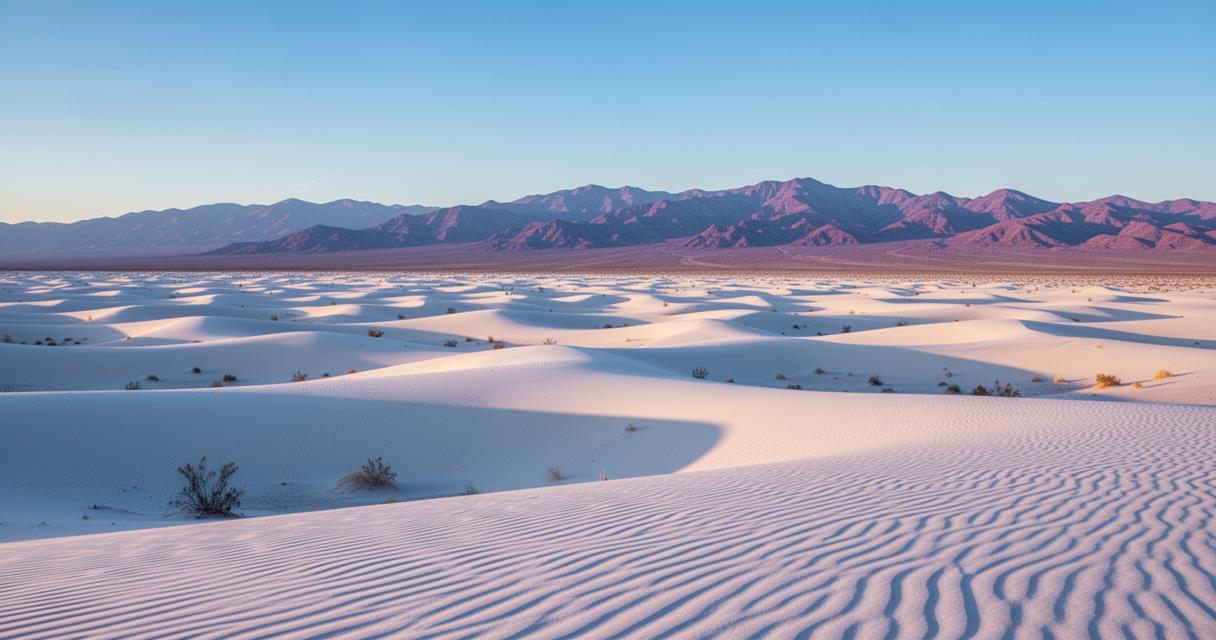
Stretching across the Tularosa Basin in southern New Mexico, White Sands National Park is one of the most extraordinary landscapes in the United States. Its vast, rippling dunes of brilliant white gypsum sand form the largest gypsum dune field in the world, drawing visitors from across the globe who come to witness a terrain unlike anything else on Earth. Yet beneath the surface beauty of this remarkable desert lies a fragile ecosystem under growing pressure from rising temperatures and shifting environmental conditions.
The essentials
- White Sands National Park contains the world’s largest gypsum dune field, created by the evaporation of the ancient Lake Otero and ongoing wind activity.
- Native flora and fauna have developed specialized evolutionary adaptations, such as lighter coloration and elongated stems, to survive in this nutrient-poor and harsh desert environment.
- Rising global temperatures are creating dangerous heat conditions that threaten both the delicate ecosystem and the safety of park visitors.
- Increased heat and insufficient moisture levels jeopardize the survival of dune-stabilizing plants, which could lead to unpredictable sand movement and more frequent sandstorms.
- The National Park Service faces complex management challenges due to the park’s proximity to the White Sands Missile Range and the necessity of coordinating safety with military operations.
- Effective conservation requires a combination of robust land management, scientific monitoring, and public education to protect the park’s unique biodiversity from the effects of climate change.
Understanding the Ecosystem of the World’s Largest Gypsum Dune Field
The Unique Formation of the Tularosa Basin and Alkali Flat
The story of White Sands National Park begins deep in geological time, in the heart of the Tularosa Basin, a vast, landlocked depression surrounded by mountain ranges in New Mexico. Over thousands of years, water flowing from the surrounding peaks dissolved gypsum from the rock, carrying it down into Lake Otero, an ancient body of water that eventually evaporated. As the lake receded, it left behind crystallised gypsum deposits on what is now known as the Alkali Flat, a wide, blinding expanse at the heart of the park. Wind then sculpted these crystals into the towering white dunes visitors see today, dunes that continue to migrate and shift with every desert breeze. This dynamic process makes the landscape not a static monument but a living, moving environment that requires careful monitoring and ongoing conservation effort.
Adapting Plant and Animal Life in New Mexico Gypsum Dunes
Few places on Earth demand more of their inhabitants than a gypsum dune field. The lack of soil nutrients, the intense reflected sunlight from the white sand, and the scarcity of water create conditions that most species simply cannot endure. Yet a surprising range of plants and animals have adapted to survive here. Certain species of yucca, cottonwood and skunkbush sumac have developed the remarkable ability to grow elongated stems as the dunes bury them, maintaining access to sunlight. Small mammals, insects and reptiles found along the Dune Life Nature Trail have, over generations, evolved lighter colouration to blend with the white sand, a vivid example of rapid natural adaptation. These delicate ecological relationships are precisely what makes this environment so vulnerable to climate change and rising temperatures.
Impact of Rising Temperatures on the Dunes and Visitor Experience
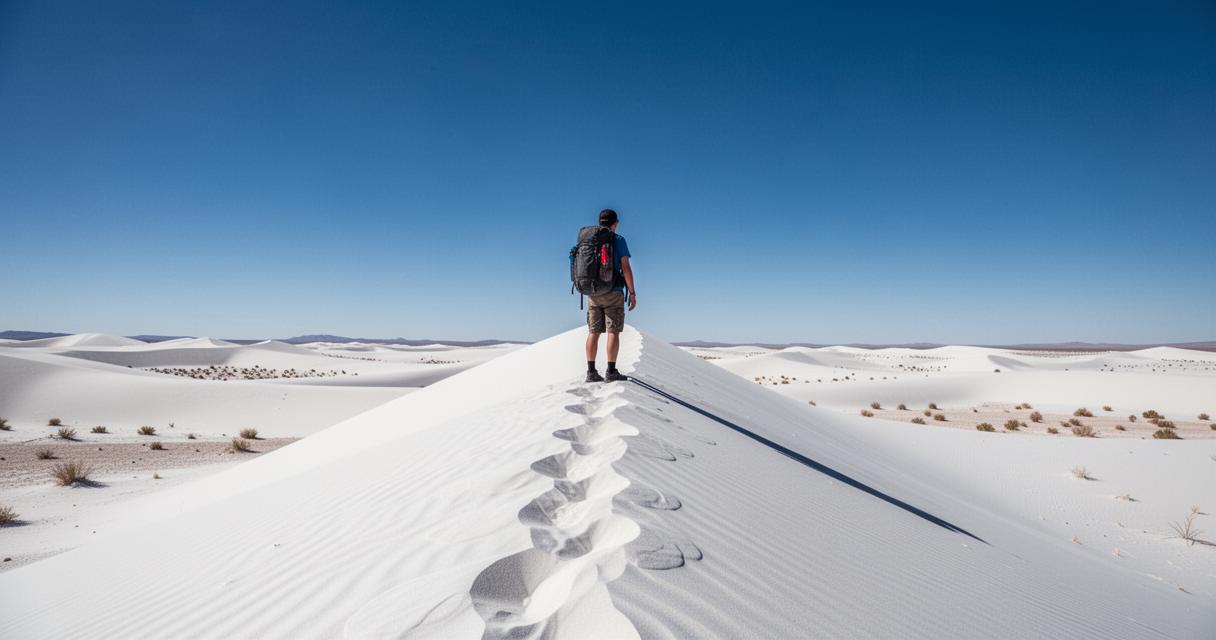
Extreme Heat Waves along the Dune Life Nature Trail
Climate scientists have documented a troubling acceleration in global warming across desert regions, and White Sands is not exempt from these changes. Extreme heat events are becoming more frequent and more intense throughout the American South-west, with summer temperatures in New Mexico regularly reaching levels that stress both wildlife and human visitors. The reflected heat from the white gypsum surface amplifies ambient temperatures significantly, meaning that conditions along a trail such as the Dune Life Nature Trail can become genuinely dangerous during peak summer months. For the park’s flora, prolonged heat reduces the availability of subsurface moisture, threatening the deep root systems that many dune-adapted plants rely upon. For animals, disrupted seasonal patterns interfere with breeding, foraging and migration cycles, putting pressure on populations that are already highly specialised and therefore less resilient to sudden change.
The broader context of desertification and land degradation adds further weight to these concerns. Research into arid environments around the world has found that rising temperatures, combined with inadequate water management, accelerate the loss of biological productivity in desert ecosystems. Where vegetation disappears, sand becomes more mobile and unpredictable, increasing the frequency and severity of sandstorms. While the dunes of White Sands are a natural formation, any further reduction in the stabilising plant life that lines their edges could alter the dynamics of the entire dune field in ways that are difficult to reverse.
Managing Safety and Hydration Near the Visitor Center and Scenic Road
The National Park Service has worked to adapt visitor infrastructure in response to rising temperatures. The visitor centre serves as a key point of information and refuge, particularly during the hottest parts of the day when heat along the scenic road can become oppressive. Rangers consistently advise those entering the park to carry substantial quantities of water, to avoid hiking during midday hours in summer, and to remain on marked trails to avoid becoming disoriented in the uniform white terrain. The scenic road that winds through the dune field, while one of the most photographed routes in the USA, can itself become a hazard when sandstorms reduce visibility or when the heat radiating from the pale surface creates disorienting mirages. Environmental sustainability and visitor safety are increasingly intertwined challenges for the park’s management teams.
Preserving white sands national park for future generations

The Role of the National Park Service and Nearby Missile Range
The situation at White Sands is unusual among American national parks in that the park is bordered by and partially overlaps with White Sands Missile Range, a large military testing area administered separately from the park. This proximity creates a complex management landscape in which the National Park Service must coordinate access, conservation and safety with military authorities. The missile range periodically causes temporary closures of the park’s main road, which affects visitor planning and limits the hours during which Americans and international tourists can explore the dunes. Despite these constraints, the relationship between the two institutions has enabled certain forms of environmental monitoring that benefit conservation efforts, as scientific instrumentation operated within the broader basin provides valuable data on temperature, wind patterns and sand movement.
On a global scale, the challenge of protecting desert environments is well recognised. Initiatives coordinated through international bodies have highlighted that land degradation is worsening across 169 countries, threatening ecosystems and displacing populations. By 2050, the displacement of large numbers of people due to climate adaptation failures is a genuine possibility in the most affected regions. These global pressures underline why preserving intact, functioning desert ecosystems like that of White Sands National Park holds importance beyond tourism and beyond the borders of New Mexico.
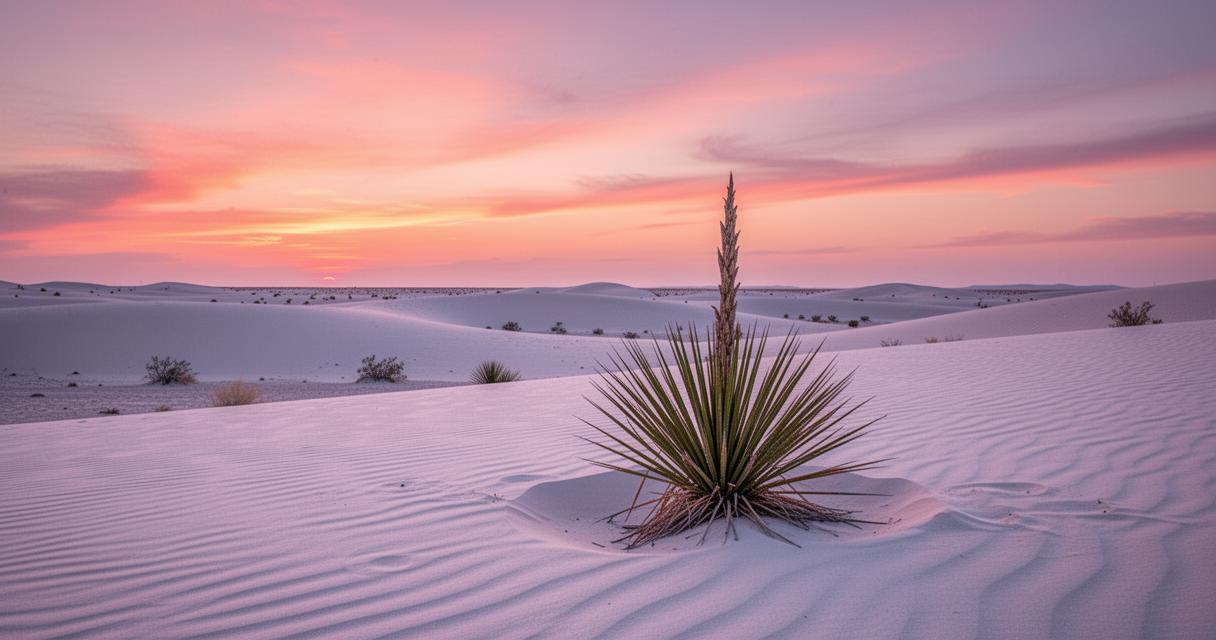
Protecting the Sunset Horizons and Delicate Desert Environment
Few experiences in the American national parks system rival watching the sun sink below the horizon at White Sands, where the sky turns vivid shades of pink and amber above the luminous white dunes. These sunset vistas are both a draw for visitors and a reminder of what is at stake if the park’s environment is allowed to degrade. Protecting this landscape requires a combination of thoughtful land management policies, investment in conservation science, and public education about the fragility of desert ecosystems. Nature-based solutions, used successfully in other vulnerable environments around the world, offer inspiration for how natural processes can be harnessed to stabilise and restore landscapes under threat.
Ultimately, the future of White Sands National Park (the largest white sand desert in the world, a monument to geological wonder and biological ingenuity) depends on the willingness of planners, scientists and visitors alike to take resource scarcity, water scarcity and ecosystem health seriously. The dunes will continue to shift, as they always have. The question is whether the living world that clings to them, and the human communities that cherish them, will be given the conditions they need to endure.